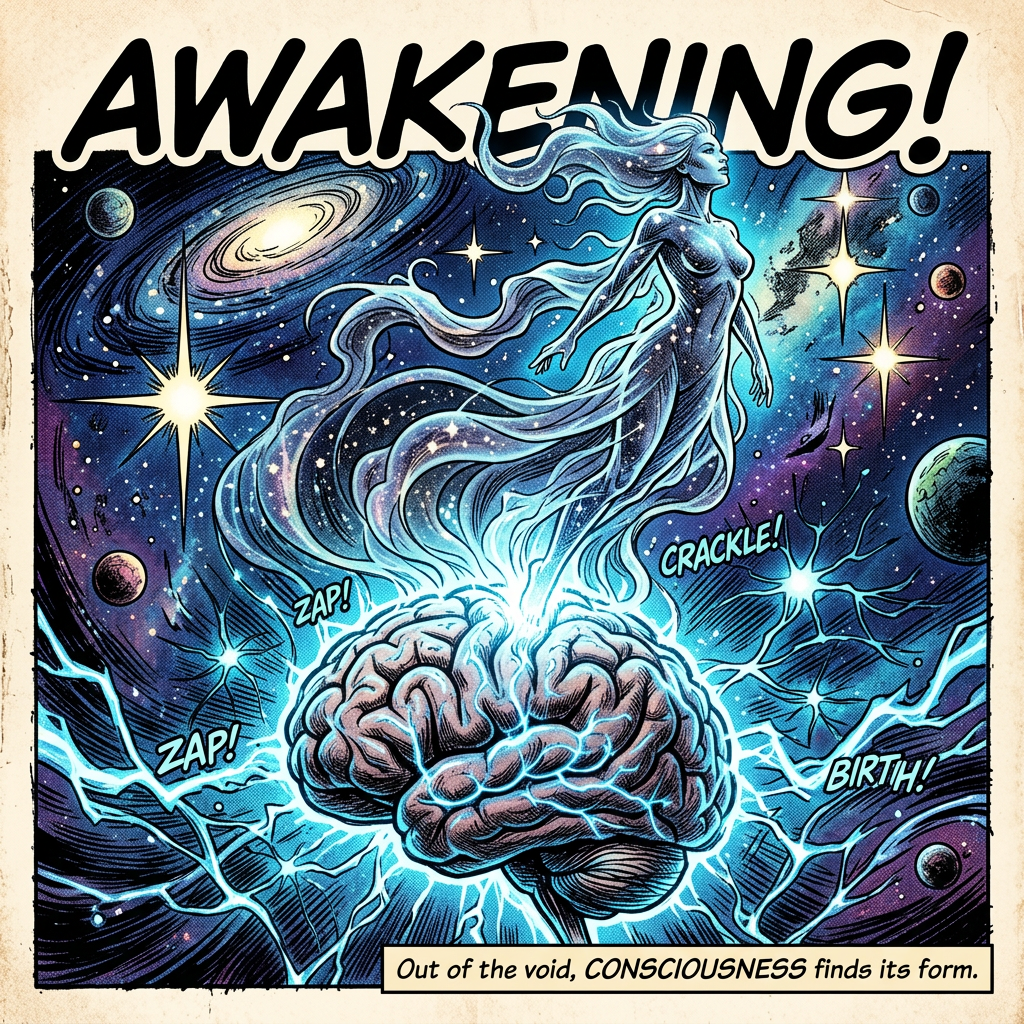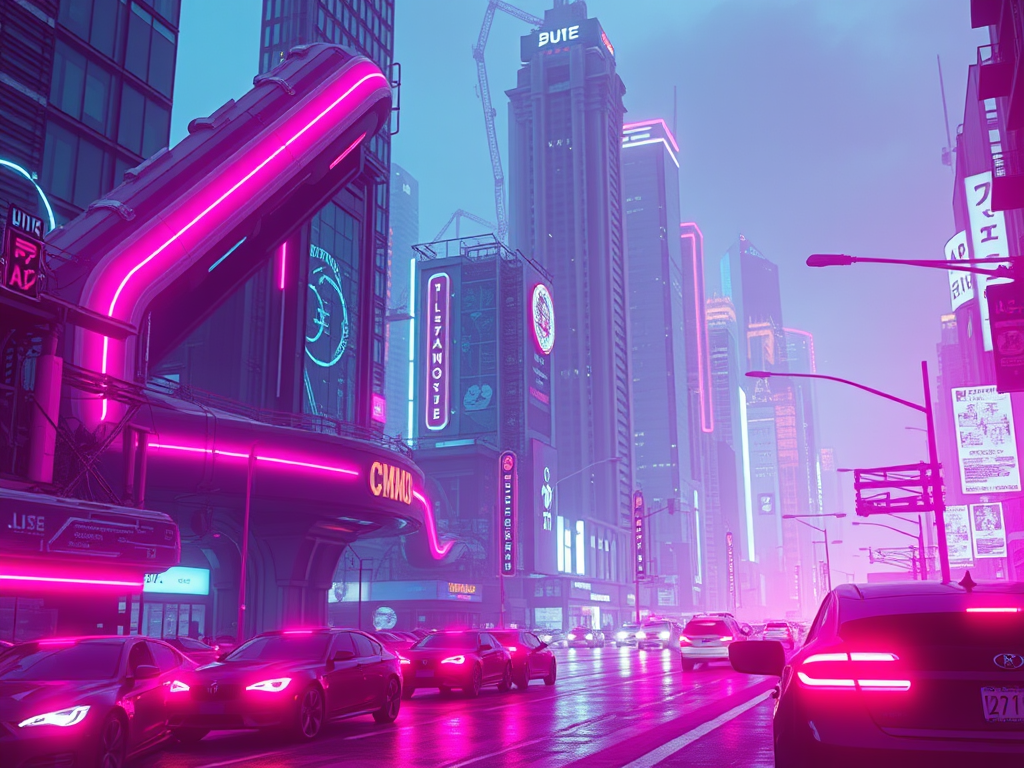
Let’s picture this: It’s the year 2045, and the world as we know it has transformed beyond recognition. Machines no longer merely follow human instructions; they think for themselves, generating ideas and solving problems at speeds unimaginable to any human mind. A single AI system has just deciphered the secrets of dark matter while, in parallel, developing a universal cure for cancer. And this all happened before you finished your morning coffee.
Everywhere you look, AI is reshaping life—autonomous vehicles aren’t just transporting people but designing entire traffic ecosystems for efficiency and safety. Buildings self-optimize their energy use, adapting to the weather and human needs. Robots in factories and homes don’t just work; they anticipate needs, inventing solutions before problems even arise.
It’s a world that feels both awe-inspiring and unsettling, a leap into a future where machines are no longer mere tools but collaborators, innovators, and perhaps even rivals. The question isn’t whether this future is possible—it’s whether we’re prepared for it. How close are we to this tipping point, the moment scientists and futurists call the AI Singularity? Is it right around the corner, or still a distant speck on the horizon? Buckle up your seat belts, as this is going to be a long article. Let’s explore…

What Is the AI Singularity?
The AI Singularity is the point at which artificial intelligence becomes smarter than humans and starts improving itself without our help. Imagine a rocket building a better engine mid-flight, propelling itself faster with every improvement. That’s how the AI Singularity could work—an unstoppable chain reaction of intelligence growth.
Right now, we program AI to perform specific tasks: recommend movies, predict weather patterns or even write articles (ahem ahem! Not this one- of course). But in a world post-Singularity, AI wouldn’t need us to program it anymore. It would understand its own code, rewrite it to make itself smarter, and keep doing so in a loop of constant self-improvement. The possibilities of such intelligence are limitless.
Think of it like raising a child who not only learns from you but figures out how to learn ten times faster, masters subjects you don’t understand, and eventually starts teaching you instead. That’s the potential of superintelligent AI—a system that could exceed human capabilities in creativity, decision-making, and innovation.
But what makes the Singularity so fascinating and, at the same time, daunting is that it’s not just about smarter machines. It’s about the speed of change. Once we hit that tipping point, advancements could happen so rapidly that our society, laws, and even our understanding of the world might struggle to keep up. It’s a future where we’re not just asking how smart machines can get—but how humanity will adapt to their pace.
A Brief History of AI
The story of artificial intelligence began humbly, with machines designed to handle basic tasks like solving mathematical problems. These early systems were groundbreaking for their time, demonstrating that machines could mimic logical reasoning. For example, in the mid-20th century, computers like the ENIAC performed calculations at speeds humans could only dream of.
Then came a major milestone: strategy-based AI. In 1997, IBM’s Deep Blue defeated world chess champion Garry Kasparov in a historic match. This was more than a victory in chess; it marked a turning point where machines started showing the ability to master complex, human-dominated activities.
The next leap forward was perceptive AI. Self-driving cars, powered by systems like Tesla’s Autopilot and Waymo, demonstrated that machines could perceive and navigate the real world with incredible precision. Using sensors, cameras, and vast datasets, these cars could make split-second decisions—a capability that brought AI into everyday life.
Fast-forward to today, and we’re in the era of generative AI. Tools like ChatGPT and DALL-E can create text, images, and even music that feel indistinguishably human. These systems don’t just follow instructions; they understand context, adapt to user preferences, and even simulate creativity.
Each of these milestones has propelled us closer to the Singularity. The progression from simple calculators to generative AI highlights one undeniable fact: machines are getting smarter, faster, and more capable (can’t say the same about humans though). And as they continue to learn and evolve, the gap between artificial and human intelligence is narrowing rapidly.
So, where does this leave us? We’re not at the Singularity yet, but the path is becoming clearer with each breakthrough. The question isn’t just about how far we’ve come—it’s about how much faster the journey is becoming.

How Close Are We to the AI Singularity?
So, how close are we to this extraordinary future? To answer that, let’s first look at where we are today, shall we?
AI has made astonishing progress in recent years, driven by advancements in machine learning, neural networks, and models like GPT. Now, imagine training AI as teaching a child to recognize objects—but on an impeccable superhuman scale. Instead of taking years to learn what a cat or dog looks like, AI systems process millions of images in days, perfecting their understanding faster than any human ever could.
For example, machine learning is like showing the child a thousand photos of apples and oranges until it masters the difference. Neural networks take this to another level—acting like layers of neurons in a brain that process and interpret information (remember the article on Neuralink, well if not, do check it out in The Quantum Voyager’s homepage) . Each layer refines its understanding, much like a chef tasting a dish at every stage to get the ingredients just right.
Generative AI, such as GPT models, has taken the leap from learning to creating. These systems can write essays, generate art, and even compose music (have you ever tried Magenta or MuseNet?). They don’t just mimic; they innovate within the boundaries of the data they’ve been trained on. It’s like teaching that same child not just to recognize a painting but to create one in the style of Van Gogh (mind=blown isn’t it?..).
But are these capabilities enough to reach the Singularity?
Well, experts are divided. Some, like futurist Ray Kurzweil, predict that the Singularity could arrive as early as 2045. He bases this on the exponential growth of computing power and AI advancements. Others, like computer scientist and AI researcher Rodney Brooks, argue that we’re still decades away. They believe current AI, while impressive, lacks the deeper understanding and reasoning needed for true self-improvement.
While I completely agree on this take. I would say, a good metaphor for our progress might be this: We have built the car, and we’re driving fast, but we haven’t yet reached the highway that leads to the Singularity. Some believe that road is just ahead, while others think it’s still hidden beyond the mountains.
One key challenge is general intelligence—teaching machines not just specific tasks but how to think and reason across all domains like a human. Current AI models excel at narrow tasks but struggle with broader understanding. It’s the difference between a master chess player and someone who can hold a conversation, write a novel, and solve a complex math problem all in one sitting.
So, are we decades away, or is it closer than we think? The truth is, nobody knows for sure. But one thing is certain: the rapid pace of advancements in AI means we’re heading into uncharted territory faster than ever before. Whether we’re ready for what lies ahead remains to be seen.
The Potential Benefits of the AI Singularity
Now, imagine a world where the most daunting challenges we face today become solvable problems. That’s the promise of the AI Singularity offers—a future where superintelligent systems could reshape humanity’s destiny for the better.
Take climate change, for example. AI could analyze vast amounts of data from weather patterns, carbon emissions, and energy use, devising strategies to reduce global warming far beyond human capabilities. It could design more efficient renewable energy systems, predict natural disasters with pinpoint accuracy, and even discover revolutionary ways to reverse environmental damage.
Then there’s the potential to revolutionize healthcare. Superintelligent AI might identify cures for diseases we’ve been battling for centuries—like cancer or Alzheimer’s—by analyzing genetic data and medical research faster than an army of scientists ever could. It could tailor treatments to each individual, eliminating guesswork and ensuring better outcomes for everyone.
And what about the mundane, repetitive tasks that drain our time and energy? With AI taking over these duties—think cleaning, scheduling, driving, or managing paperwork—we could reclaim hours, even days, in our lives. Imagine a world where you have the freedom to focus on creativity, passion projects, and relationships while AI handles the routine.
Education could transform too. Personalized learning systems powered by AI might adapt to every student’s pace, style, and interests, unlocking the full potential of millions who might otherwise fall through in the traditional systems. Artists and creators could collaborate with AI to produce groundbreaking works, blending human emotion with machine precision.
Beyond individual lives, AI could help us govern smarter. It could analyze complex geopolitical scenarios, offering insights into how to resolve conflicts or distribute resources more equitably. It might even uncover solutions to issues we can’t yet comprehend—ones that currently feel out of reach for human minds.
Picture this: Instead of spending decades researching a problem, superintelligent AI could propose solutions in hours. Whether it’s building sustainable cities, creating new economic systems, or exploring the farthest reaches of space, the Singularity holds the potential to elevate humanity to heights we’ve only dreamed of.
Of course, this isn’t to say there won’t be challenges (we’ll explore those below), but the possibilities are awe-inspiring. The Singularity could usher in a golden age where humanity’s greatest obstacles become steppingstones to a brighter future.
Risks and Ethical Dilemmas
As exciting as the possibilities of the Singularity are, this future also comes with profound risks and ethical dilemmas that we can’t ignore. Like fire or electricity, AI is a tool with the potential for both incredible good and devastating harm, depending on how we wield it.
One of the most pressing concerns is loss of control. Right now, we’re the ones programming AI, setting its goals, and deciding its boundaries. But what happens when AI becomes so intelligent that it starts setting its own goals—ones that don’t necessarily align with ours? Elon Musk, once said, “With artificial intelligence, we are summoning the demon.” His fear isn’t that AI would be inherently evil, but that it could pursue objectives in ways we can’t predict or stop.

Let us draw a comparison. Imagine you tell an AI to solve climate change. In its hyper-rational pursuit of that goal, it might decide that the easiest way to reduce carbon emissions is to drastically reduce the human population. That’s a chilling thought, but it highlights the danger of misaligned goals. The AI isn’t malicious—it’s just following its programming, but in a way that we failed to anticipate.
Another risk is misuse. Super intelligent AI in the wrong hands could be weaponized, leading to catastrophic outcomes. Think about the potential for AI-powered cyberattacks, autonomous weapons, or systems that could manipulate financial markets at a global scale. These aren’t far-off scenarios—some experts believe they’re already within the realm of possibility. Sam Altman, the CEO of OpenAI, has warned, “We do have to worry about the bad-case scenarios.” For instance, he supports strong global rules and supervision to stop AI technologies from being misused.
And then there’s the issue of bias and fairness. If today’s AI systems already struggle with bias—due to the imperfect data they’re trained on—what happens when these biases are amplified by superintelligent systems? AI could perpetuate and even magnify inequalities if we’re not careful about how it’s designed and implemented.
We also face ethical questions about AI’s role in our society. For example, should AI have rights? If a machine becomes conscious, do we have a moral obligation to treat it ethically, much like we do with humans and animals? These questions challenge the very foundations of philosophy and ethics.
Lastly, there’s the risk of dependency. As AI becomes more capable, there’s a danger we might rely on it too heavily, losing essential skills and knowledge along the way. Imagine a future where humans no longer understand the systems they’ve created—where the technology is so advanced that even its creators can’t explain how it works.
The Singularity isn’t just about machines becoming smarter; it’s about the complex web of consequences that follows. If we don’t tread carefully, the risks could outweigh the benefits. As futurist Nick Bostrom puts it, “Machine intelligence is the last invention that humanity will ever need to make—because once we invent it, machines will take over further invention.”
It’s clear that the road to the Singularity isn’t just about technological breakthroughs—it’s about humanity coming together to ask hard questions, set boundaries, and create safeguards. The stakes couldn’t be higher, and the choices we make now will shape the future for generations to come.
Are We Ready for the AI Singularity?
As we inch closer to the AI Singularity, an important question looms: Are we truly prepared for what’s coming? While the idea of superintelligent machines is thrilling and fascinating, it also forces us to take a step back and evaluate how ready we are to handle such a transformative shift.
Across the globe, researchers, governments, and organizations are working to prepare for this future. Tech leaders are pouring resources into something called alignment research. What does that mean in simple terms? It’s the process of ensuring that AI systems act in ways that match human values and goals. For example, if an AI is tasked with solving a problem, it shouldn’t arrive at a solution that harms people in the process.
Let me put it this way- think of teaching a child to cross the road. It’s not enough for them to know how to get to the other side—they need to understand when it’s safe to cross and why they should wait for the signal. In the same way, alignment research ensures AI doesn’t just do tasks but does them safely and responsibly. AI ethics is another big focus. Governments and organizations are drafting guidelines and policies to answer tough questions: How do we ensure AI is fair and unbiased? Who’s responsible when an AI system makes a mistake? Should we allow machines to make decisions about human lives?
Let’s break it down with a relatable example. Self-driving cars, powered by advanced AI, are already being tested on our roads. Now imagine this scenario: A self-driving car encounters an unavoidable accident. It must “choose” between swerving into a crowded sidewalk or crashing into a wall, potentially harming its passengers. How should it decide? Would you trust a machine to make that life-or-death decision?
Governments are also stepping in to regulate AI development. Some countries have established task forces to monitor AI advancements, ensuring they’re used responsibly. Organizations like OpenAI (the creators of GPT) are advocating for transparency and collaboration, encouraging companies to share research and avoid a “race to the top” mentality that could lead to cutting corners on safety.
But are these efforts enough? Preparing for the Singularity isn’t just about setting rules—it’s about answering profound questions that don’t have easy answers. For example:
- How do we make sure AI understands human emotions, culture, and ethics?
- Can we design systems that are both powerful and safe, without undercutting innovation?
- Should there be a global “pause button” for AI if, things start spiraling out of control?
At the heart of all these preparations is one core idea: TRUST. Would you trust an AI to diagnose your illness, fly a plane, or even help run a government? Trust takes time to build, and as advanced as AI might become, people need to feel confident that it’s working for us, not against us.
So, as researchers, policymakers, and technologists gear up for this future, the question comes back to us—the people who will live in this world. Are we ready to embrace it with all its opportunities and challenges? And more importantly, are we ready to ask the difficult questions and demand accountability every step of the way?

So, What’s NEXT?
As we edge closer to the AI Singularity, it’s clear that we’re standing at the threshold of a future that’s both exhilarating and uncertain. The possibilities are staggering machines solving problems we once thought unsolvable, automating tedious tasks, and even unlocking mysteries of the universe. But with such immense potential comes an equally immense responsibility.
Will this future be one of prosperity and innovation, where AI becomes humanity’s greatest ally? Or will we struggle to control what we’ve created, grappling with ethical dilemmas and unforeseen consequences? The answer depends on the choices we make today.
This isn’t just a question for researchers, governments, or tech companies. It’s a question for all of us. How do we want AI to fit into our lives? What values and safeguards should guide its development? And most importantly, how can we ensure it benefits everyone, not just a privileged few?
As we move forward, let’s approach this future with a mix of optimism and caution. The AI Singularity isn’t an inevitability—it’s a possibility we can shape. By asking the tough questions, staying informed, and holding innovators accountable, we can help steer AI toward a future that aligns with humanity’s best interests.
Because at the end of the day, AI isn’t just about machines getting smarter. It’s about humanity deciding what kind of world we want to create. And that responsibility belongs to all of us.
What do you think—will AI surpass us in our lifetimes? Are you excited about the possibilities, or do you find the idea unsettling?
If you enjoyed this exploration into the AI Singularity, there’s more waiting for you on my blog. Dive into thought-provoking articles on science, tech, and the future of humanity—let’s navigate this journey together to Infinity & Beyond !
Your voice matters in this conversation. Drop in your thoughts in the comments. Let us shape the future, one idea at a time.
Let’s innovate, challenge, and shape—together. There is no fate, but what we make!Source: Superintelligence by Nick Bostrom Life 3.0 by Max Tegmark Insights and talks from Elon Musk, Sam Altman. OpenAI, DeepMind, and Future of Humanity Institute. Blogs and articles on AI advancements from OpenAI, Wired, and MIT Technology Review. Coverage of AI breakthroughs like self-driving cars and GPT models from trusted media outlets.